Podcast
Choosing a podcast studio: listen before you book
Check the sound, table setup, support and file delivery before booking a podcast recording.
Stxdio editorial team ·
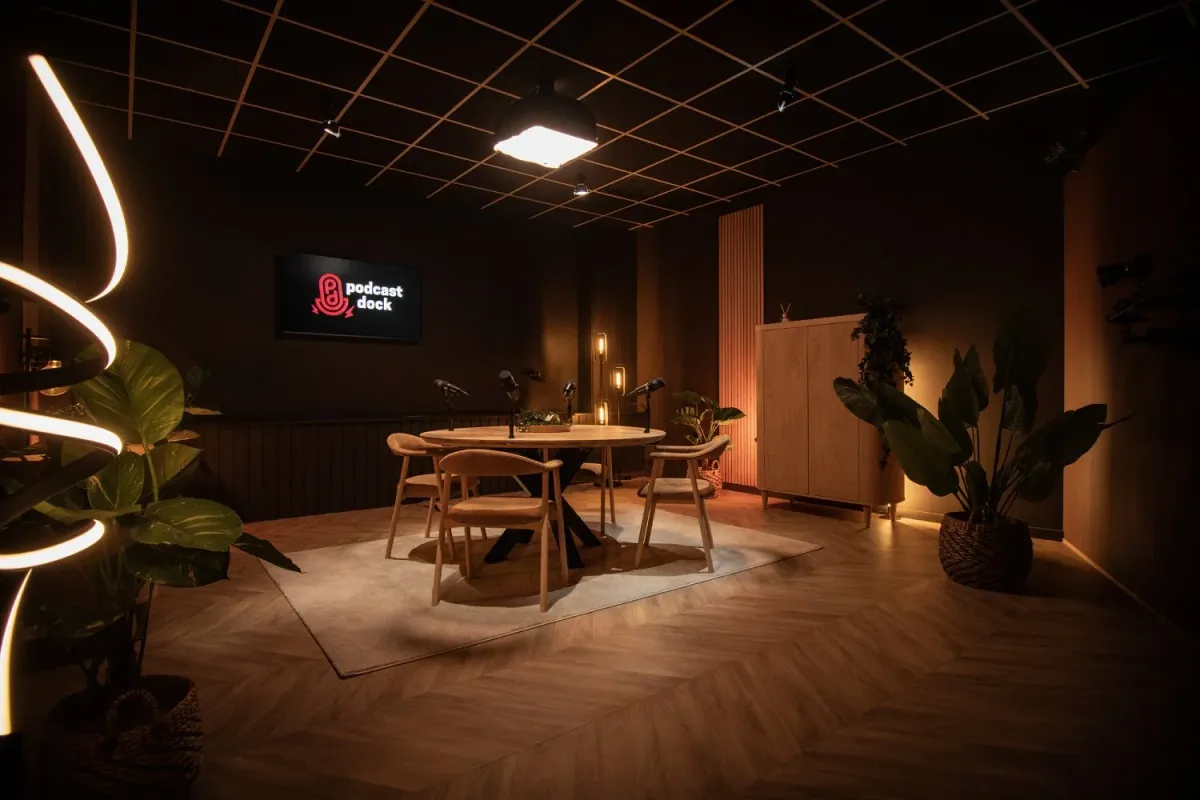
A good-looking podcast set is not proof of good recording sound. Start with your format: how many speakers, whether you need video and whether guests will join remotely. Then compare studios using a short recording sample and concrete production requirements.
1. Plan the table before comparing locations
List the number of speakers, who needs to see whom and where the microphones and cameras will go. Check that everyone has a comfortable seat, a suitable microphone position and headphones where needed. If you need video, ask for sample frames of the exact setup.
Ask whether the studio can accommodate your own equipment and any guest accessibility needs. Allow space for the producer or engineer without having them interrupt the conversation.
2. Assess the sound for your situation
Ask for an unprocessed recording sample from the room and equipment you intend to use. Listen for echo, background noise and differences between speakers. A polished showreel may hide issues that matter during your own recording.
Find out who sets recording levels, monitors the session and spots distortion or dropouts. You do not need to select on model numbers alone; a reliable process and a recording suited to your voices and format matter more.
3. Agree on what you receive afterwards
“Recording included” can mean one mixed audio file or separate tracks that let you edit each voice later. Ask about file formats, individual tracks, transfer and how long files remain available. Ask whether a backup is made during the session and who checks it.
Editing, noise processing, music, transcription and publishing are separate jobs. Ask for them to be listed separately in the quote if you need them. This makes the end of the studio’s responsibility clear.
4. Test video and remote guests as part of the format
For a video podcast, camera positions, framing, lighting and visible microphones matter alongside the audio setup. Ask for example images from the arrangement you intend to use. Discuss whether you receive raw camera files or an edited episode.
If a guest joins remotely, test the connection beforehand. Agree who helps with microphone choice, monitoring and any local recording. Arrange a fallback, such as a phone connection, in case the normal connection fails.
5. Book the time around the conversation too
An hour-long conversation needs extra time for arrival, microphone adjustment, level checks, pauses and copying files. Ask when the hire starts and whether an engineer stays throughout. Check the end time, overtime and cancellation terms.
Before booking, send a short brief covering speaker count, local or remote guests, audio or video, expected deliverables and recording duration. Ask the studio to base its proposal and included services on that brief.