Video
Choosing a video studio for your production
From set building and camera movement to sound, lighting and delivery: choose a video studio that fits your production plan.
Stxdio editorial team ·
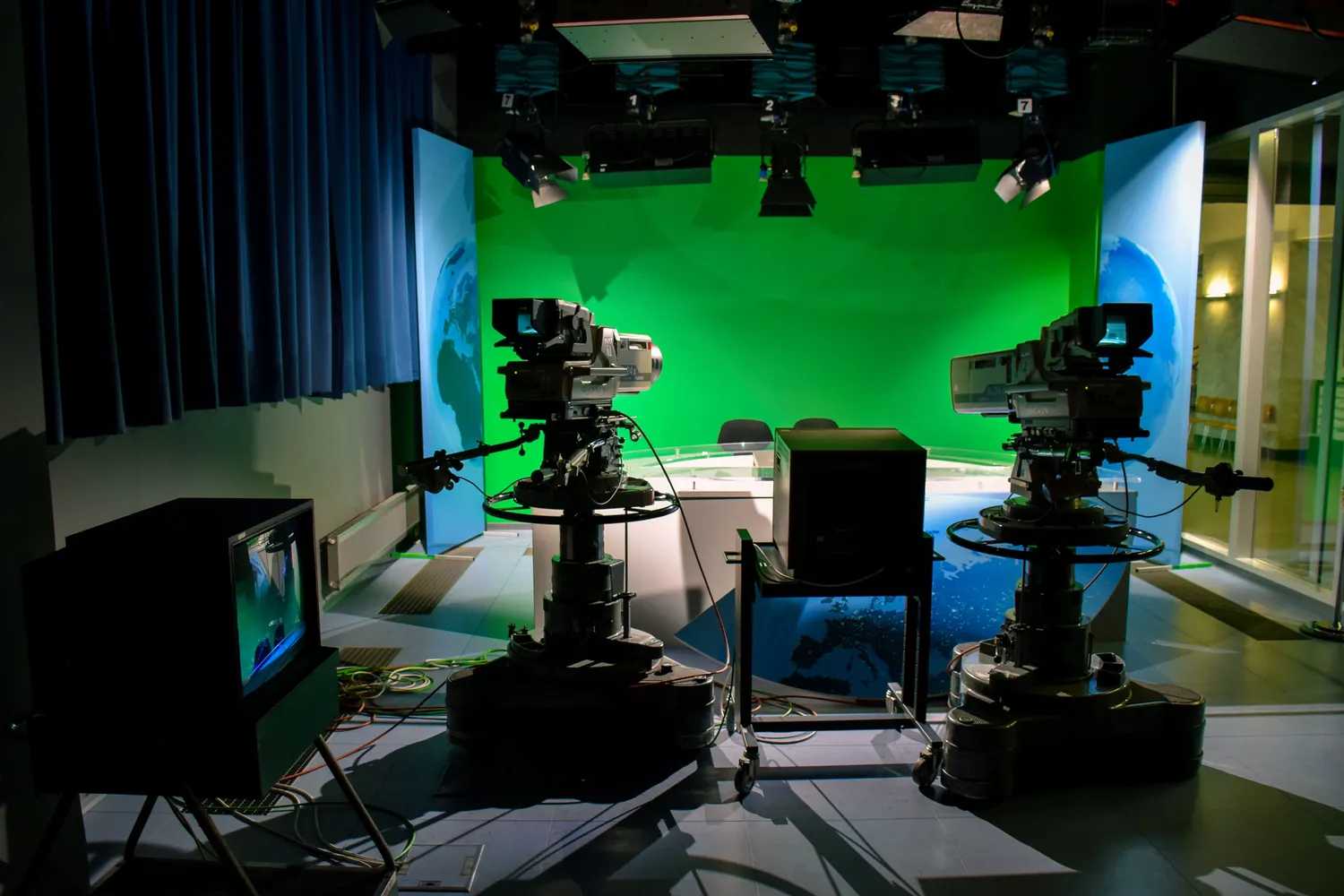
“Video studio” can mean a small interview room or an empty floor for a full set. Start with your production plan: what should appear on camera, what must stay out of frame and what movements do you need? Those answers help you identify the space, crew and facilities required.
These checks apply to interviews, product videos, social clips and larger shoots. Adapt them to your own shot list.
1. Measure the set including everything outside the frame
The set must fit more than the presenter. Allow space for the camera, tripod or dolly, lighting stands, sound crew and walkways. Ask about clear floor dimensions, ceiling height, permanent obstacles and doors and windows. A floor plan and recent overview photos are more useful than a close-up of the set.
Plan the most difficult camera movement on paper first. Can the camera move backwards without reaching a wall? Is there room for another angle without a camera appearing in shot? If you are building a set, compare the doors, lift and loading route with the dimensions of the largest part.
2. Choose between an existing look and your own lighting plan
A furnished set saves setup time but can limit framing and brand style. An empty space gives more freedom and needs more preparation. Ask which backgrounds are available, whether you can change them and how long you need to restore the set afterwards.
Check whether windows can be blacked out if the lighting must stay consistent. Discuss which lights, grip and power points are available, what is included and who operates the equipment. Send a reference image so everyone understands the intended look.
3. Test sound before the shoot
For spoken content, visit at a comparable time and listen to a short test with ventilation and equipment running. Check traffic, neighbouring rooms and noisy devices on set. Ask about microphones, wireless systems, monitoring and who watches the sound during recording.
A noisier space can work for a video without dialogue but be unsuitable for a quiet interview. Assess the sound against your script rather than a general promise that the studio is quiet.
4. Agree on the technical workflow
Establish what you are hiring: the room alone, a room with lights or a full recording crew. Agree who brings cameras, lenses, recording cards, teleprompter and any livestream equipment. If your crew is coming, discuss access, setup time and who is responsible for connecting equipment.
Agree on deliverables too: raw files, selected takes or an edit. Specify file formats, transfer and delivery timing. Check sample footage and sound during the shoot so problems can still be corrected on site.
5. Budget for the day you will actually run
Include more than recording time. Allow for loading, set building, lighting and sound tests, breaks, changes and clearing up. Ask whether hire starts when the crew arrives and when the room must be empty. Get separate prices for extra equipment, support, overtime and cleaning.
Send two or three studios the same brief and ask for quotes on the same basis. This avoids comparing an empty room with a fully equipped set. Consider crew and talent access and cancellation terms when making your final choice.